
Feasibility study funding
Feasibility Study Funding Round 1: Diagnosis and Monitoring of Indoor Built Environments
Following the outstanding success of our first Feasibility Study Funding call, BreatHE IN is delighted to announce the three projects selected for funding through our first or two funding rounds.
The funding call followed the first BreatHE IN Sandpit, which focused on Diagnosis and Monitoring for Healthier Indoor Environments. The response from the BreatHE IN community was exceptional, generating 25 interdisciplinary applications from researchers across the UK. The quality of submissions was outstanding, making the funding decisions particularly challenging. Following a rigorous scientific review and prioritisation process, three projects were selected for funding based on their scientific excellence, innovation, collaborative strength and alignment with the aims of the network.
Together, these feasibility studies represent an investment of £125,000 by BreatHE IN to catalyse innovative, interdisciplinary research that will generate the preliminary evidence needed to underpin future large-scale funding applications and deliver healthier indoor environments. The projects span engineering, environmental science, diagnostics, public health and air quality, demonstrating the breadth of expertise and collaborative ambition within the BreatHE IN Network.
Funded Projects:

Project 1: Validating Emerging and Low-Cost Indoor Fungal Spore Sensing Solutions
Project Lead: Dr Ian Crawford
Research Fellow, University of Manchester
Project Collaborators
University of Manchester, University of Hertfordshire, UK Health Security Agency (UKHSA) and Urban360.
The project brings together a highly interdisciplinary team with expertise spanning bioaerosol science, engineering, sensing technologies, environmental exposure and public health. Alongside Dr Ian Crawford, the project team includes Professor James Evans (Chief Executive Officer, Urban360 and Professor of Geography, University of Manchester); Professor Ian Johnston (Director, Biodetection Technologies Hub, University of Hertfordshire); Professor Chris Stopford (Head of Particle Instruments & Diagnostics, University of Hertfordshire); Dr Richard Baxter (Senior Research Fellow, Biodetection Technologies Hub, University of Hertfordshire); Dr Etelka Chung (Molecular Biologist, University of Hertfordshire); Dr Javier Espinosa Montiel (Research Fellow, University of Hertfordshire); Dr Milad Heidari Koochi (Researcher, University of Hertfordshire); Dr Jianghan Tian (Research Fellow, University of Hertfordshire); Dr Emma Marczylo (Experimental Toxicology Programme Lead, UK Health Security Agency); Dr Alison Buckley (Senior Aerosol Scientist, UK Health Security Agency); and Richard Kaye (Researcher, University of Hertfordshire).
Project Overview
Indoor mould exposure is a significant but often under-monitored risk to respiratory health, contributing to respiratory disease and poor indoor environmental quality. This project will evaluate innovative real-time and low-cost sensing technologies capable of continuously monitoring airborne fungal spores in mould-affected buildings, improving our understanding of public and occupational exposure.
By combining emerging bioaerosol spectrometers with established laboratory validation techniques and machine learning approaches, the team will assess the performance of these technologies in both real-world and controlled environments. The project has the potential to transform how fungal exposure is monitored, enabling more accessible long-term monitoring while providing valuable evidence to support healthier buildings, improved public health protection and future mitigation strategies.
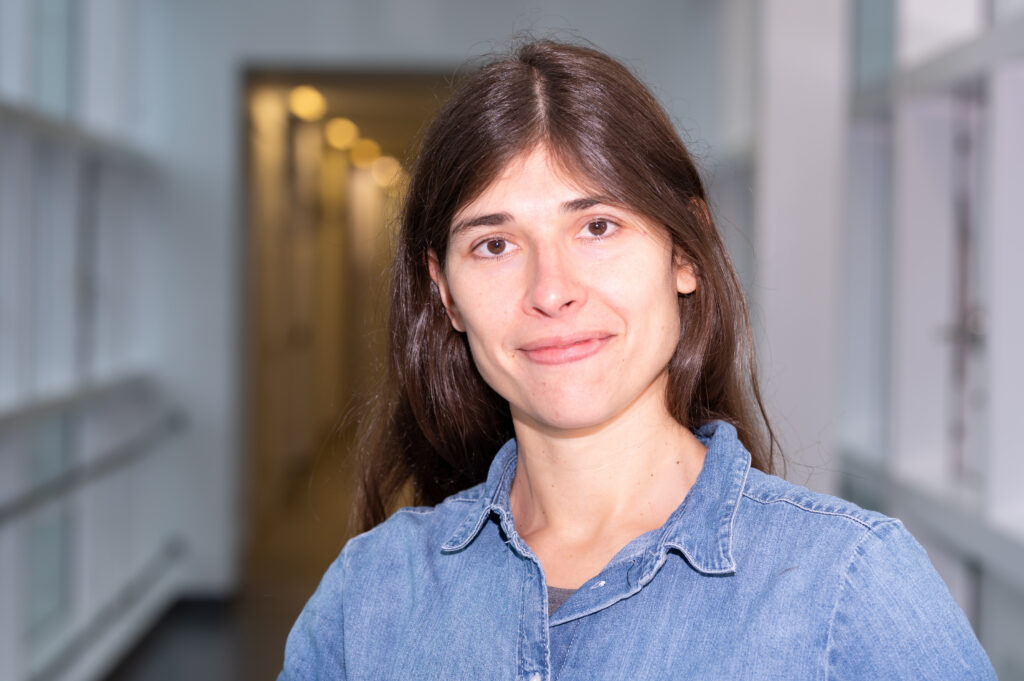
Project 2: Environmental Biomarker Diagnostics: Airborne Lactate for Real-Time Health Monitoring
Project Lead: Dr Alba Llibre Serradell
Assistant Professor in Immunometabolism, University of Birmingham
Project Collaborators
University of Birmingham, University of Hertfordshire and Respire Diagnostics (REDI).
The project brings together expertise in immunometabolism, digital microfluidics, aerosol detection, diagnostics and public health. Alongside Dr Alba Llibre Serradell, the team includes Professor Loïc Coudron (Professor of Digital Microfluidics and Aerosol Detection, and Head of the Microfluidics and Microengineering Group, University of Hertfordshire); Dr Shaokai Hong (CEO and Co-Founder, Respire Diagnostics (REDI)); and Dr Gabriella Morley (Public Health Registrar).
Project Overview
This project aims to establish a novel, non-invasive platform for health monitoring by detecting airborne biomarkers in exhaled breath using advanced microfluidic sensing technologies. The research will investigate whether airborne lactate, a biomarker associated with infection and altered metabolism, can be reliably detected from indoor air.
By integrating aerosol collection with digital microfluidic recovery and sensitive analytical techniques, the team hopes to establish the feasibility of a completely new approach to environmental biomarker diagnostics. In the future, this technology could support disease monitoring, outbreak surveillance and earlier detection of respiratory illness, while opening new opportunities for non-invasive health monitoring within indoor environments.

Project 3: Diagnosing Indoor Exposure to Traffic-Related Air Pollution in West Midlands Social Housing (INHALE-WM)
Project Lead: Dr Nana Wei
Research Fellow in Air Quality Modelling, University of Birmingham
Project Collaborators
University of Birmingham, University of Reading and Cambridge Environmental Research Consultants (CERC).
The project combines expertise in air quality modelling, environmental exposure assessment, public health and the built environment. Alongside Dr Nana Wei, the team includes Dr James Hall (Department of Applied Health Sciences, University of Birmingham); Dr Jenny Stocker (Air Quality Specialist, Cambridge Environmental Research Consultants (CERC)); and Dr Shu-Ling Lu (Associate Professor, School of Construction Management and Engineering, University of Reading).
Project Overview
The INHALE-WM project will investigate how traffic-related air pollution enters homes and contributes to indoor exposure within social housing across the West Midlands. By examining how housing characteristics, surrounding environments and outdoor pollution sources interact, the research will improve understanding of indoor exposure to outdoor air pollution in vulnerable communities.
The findings will generate important evidence to support future strategies aimed at reducing health inequalities, informing housing and planning policy and improving indoor environmental quality for residents living in social housing.
Looking Ahead
These projects exemplify the collaborative and interdisciplinary research that BreatHE IN was established to support. Bringing together expertise from universities, industry, government agencies and public health organisations, they will generate valuable feasibility data while laying the foundations for future research, innovation and real-world impact.
We congratulate all three project teams and look forward to sharing updates as their research progresses across the BreatHE IN Network.
We would also like to thank everyone who submitted an application and contributed to the reveiwing process for our first Feasibility Study Funding round. The quality and ambition of proposals received demonstrated the strength of the BreatHE IN community and we are excited to continue building on this momentum.
The next opportunity to apply for BreatHE IN Feasibility Study Funding will follow our second Sandpit event, taking place on 14th October 2026 at the University of Birmingham. The second funding round will once again make up to £125,000 available to support innovative interdisciplinary feasibility studies, this time focusing on the theme of Intervention and Prevention for Healthier Indoor Environments.
Researchers, industry partners, policymakers and public contributors are encouraged to join us to develop new collaborations, co-create ambitious research ideas and help shape the next generation of healthier indoor environment research. Attendance at the Sandpit will be a prerequisite for funding eligibility, with registration opening on 1st September 2026.
Our funders and partners